

How safe are shredding services in the UK and how can businesses maximise data security?
Shredding services in the UK are highly secure when delivered by accredited providers operating under strict chain of custody procedures, GDPR compliance standards and certified destruction protocols. When businesses use compliant shredding services, they significantly reduce the risk of data breaches, identity theft and regulatory penalties.
However, not all shredding providers operate to the same standard. Security depends on accreditation, transport controls, destruction methods, documentation and environmental handling of shredded material.
This comprehensive guide explains:
-
How secure shredding services work
-
Whether shredding services are GDPR compliant
-
The difference between on-site and off-site shredding
-
What certifications to look for
-
How chain of custody protects your documents
-
Key UK paper waste data and why it matters
-
How shredding supports circular economy goals
Table of contents
Why shredding services matter for business security
Every organisation generates confidential information. This includes:
-
Employee HR records
-
Payroll data
-
Customer financial details
-
Medical information
-
Legal documentation
-
Commercial contracts
-
Supplier agreements
If this data is disposed of incorrectly, it can lead to:
-
Identity theft
-
Fraud
-
Corporate espionage
-
GDPR enforcement action
-
Reputational damage
-
Loss of stakeholder trust
Under UK GDPR and the Data Protection Act 2018, businesses have a legal obligation to ensure personal data is disposed of securely.
Secure shredding services provide controlled destruction of physical documents and media, ensuring information cannot be reconstructed or recovered.
Data protection does not end when documents leave your office. Disposal is part of the lifecycle responsibility.
Key UK paper waste data and why secure destruction matters
To understand why secure shredding matters, it is important to consider the scale of paper waste in the UK.
UK paper and cardboard waste volumes
According to the UK Government’s Waste Data Interrogator and Defra statistics:
-
The UK generates over 10 million tonnes of paper and cardboard waste annually.
-
Paper and card represent one of the largest waste streams in commercial and industrial sectors.
-
Recycling rates for paper and cardboard in the UK are consistently above 70 percent, making it one of the most widely recycled materials.
This means millions of tonnes of paper are collected, transported and processed each year. Within that volume sits a significant proportion of confidential business information.
Why this matters for security
High paper volumes increase:
-
Risk exposure during storage
-
Risk during transport
-
Risk at transfer stations
-
Risk if documents enter general recycling streams without secure destruction
If confidential documents are placed into standard recycling bins without shredding, they may be accessible during collection, sorting or transport.
Secure shredding ensures:
-
Confidential information is destroyed before entering recycling
-
Businesses maintain audit trails
-
Sensitive data does not leak through operational waste streams
Secure destruction is therefore both a compliance requirement and a risk management strategy.
Are shredding services GDPR compliant in the UK?
Yes, professional shredding services can support GDPR compliance, but only if they operate under strict data protection controls.
Under UK GDPR, organisations must ensure:
-
Personal data is processed securely
-
Data is not retained longer than necessary
-
Data is disposed of in a secure manner
-
Third-party processors meet compliance standards
When you use a shredding provider, they become a data processor under GDPR.
To remain compliant, you should ensure your provider:
-
Has documented security procedures
-
Provides a contract or service agreement
-
Issues certificates of destruction
-
Maintains staff screening processes
-
Holds relevant accreditations
The Information Commissioner’s Office (ICO) can issue fines of up to £17.5 million or 4 percent of global turnover for serious breaches.
Secure shredding is therefore not optional for many sectors, including finance, healthcare, legal services and education.
On-site vs off-site shredding: which is more secure?
Both on-site and off-site shredding can be secure when delivered by accredited providers.
The decision depends on operational needs and risk tolerance.
On-site shredding, mobile shredding
On-site shredding involves a secure shredding vehicle arriving at your premises. Documents are destroyed immediately, often with the option for staff to witness the process.
Advantages:
-
Immediate destruction
-
Maximum transparency
-
Reduced transport time
-
Strong audit confidence
This method is commonly chosen by organisations handling highly sensitive or regulated data.
Off-site shredding
Off-site shredding involves collection of documents in locked containers and transportation to a secure shredding facility.
Advantages:
-
Suitable for high volumes
-
Cost-efficient for routine collections
-
Industrial-scale destruction capacity
Security is maintained through:
-
Sealed consoles
-
Tamper-proof vehicles
-
CCTV-monitored facilities
-
Controlled access environments
The key factor is not location, but compliance and chain of custody.
What makes a shredding service safe and compliant?
Not all shredding services are created equal. A secure provider should demonstrate:
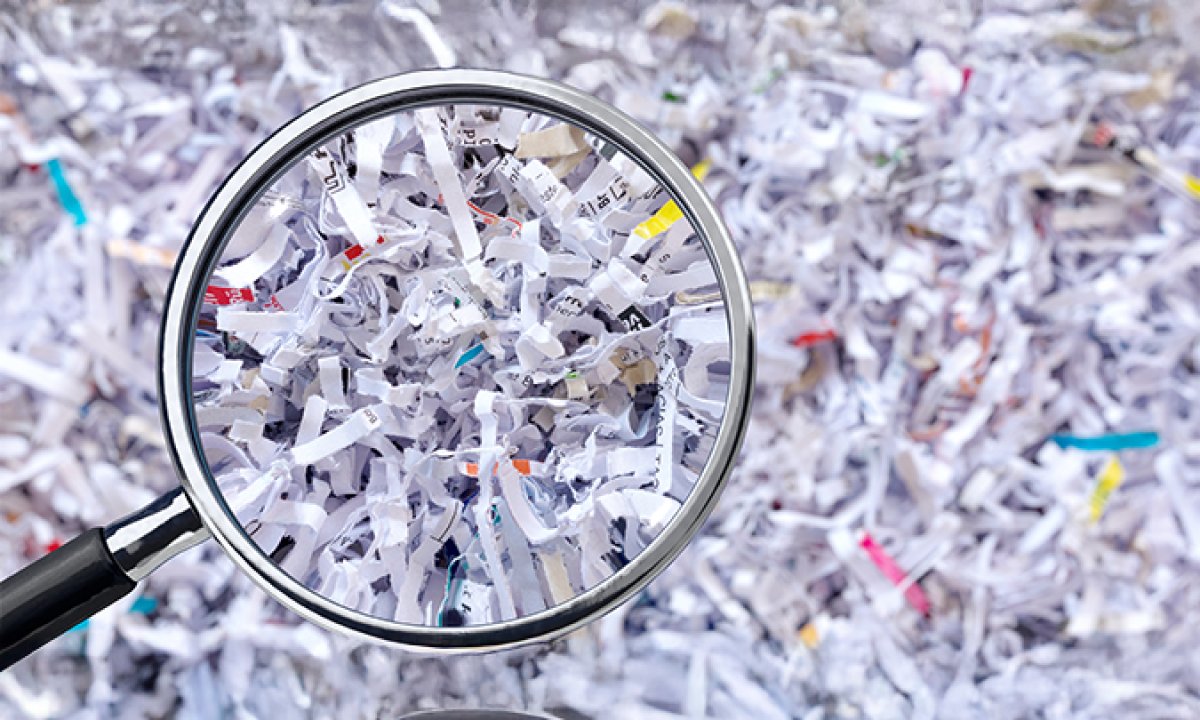
1. Industrial cross-cut or micro-cut shredding
Modern shredders reduce documents to small particles, making reconstruction virtually impossible.
Micro-cut shredding provides the highest level of destruction.
2. Secure transport controls
Vehicles should be:
-
Locked and alarmed
-
GPS tracked
-
Operated by security-cleared staff
3. Staff vetting and training
Personnel handling confidential waste should undergo:
-
Background checks
-
Security training
-
GDPR awareness training
4. Documented procedures
Secure providers maintain:
-
Written security policies
-
Incident management protocols
-
Audit documentation
-
Data processor agreements
5. Environmental responsibility
Secure shredding should not compromise sustainability. Reputable providers ensure shredded material enters certified recycling streams.
This aligns security with circular economy objectives.
What certifications should a shredding company have?
Accreditations provide independent validation of security standards.
Look for:
UKSSA membership
The United Kingdom Security Shredding Association sets strict operational standards for secure destruction. Members are independently audited every two years.
ISO 9001
Demonstrates a certified quality management system and consistent operational standards.
EN 15713
Specifically relates to the secure destruction of confidential material.
Cyber essentials
A UK government-backed certification protecting organisations against common cyber threats.
UKAS accreditation
UKAS-backed certifications provide independent, government-recognised validation.
Accreditation reduces risk and increases trust.
How does chain of custody protect confidential documents?
Chain of custody refers to documented control of materials from collection to destruction.
A secure chain of custody includes:
-
Locked consoles on-site
-
Logged collection times
-
Signed transfer documentation
-
Secure vehicle transport
-
Controlled facility access
-
Recorded destruction process
Each step is documented.
This prevents:
-
Document loss
-
Unauthorised access
-
Tampering
-
Misplacement
Without documented chain of custody, risk increases significantly.
Do shredding services provide certificates of destruction?
Yes. A certificate of destruction is a formal document confirming that confidential material has been securely destroyed.
It typically includes:
-
Date of destruction
-
Volume processed
-
Method used
-
Provider details
-
Confirmation of compliance
This certificate forms part of your audit trail and demonstrates due diligence.
In regulated sectors, this documentation may be required during inspections.
How secure shredding supports sustainability and the circular economy
Secure shredding does more than protect data.
It also supports material recovery.
Paper is one of the most successfully recycled materials in the UK. According to Defra statistics, paper and card recycling rates exceed 70 percent nationally.
When confidential documents are securely shredded:
-
Fibres can be recovered
-
Paper enters recycling streams safely
-
Virgin fibre demand reduces
-
Carbon emissions associated with paper production decrease
Recycling one tonne of paper can save approximately:
-
17 trees
-
7,000 gallons of water
-
Significant energy compared to virgin production
Secure shredding therefore contributes to both:
-
Data protection
-
Resource efficiency
This aligns with circular economy principles, keeping materials in use while protecting sensitive information.
Final summary and next steps
Shredding services in the UK are safe when delivered by certified, compliant providers operating under strict security controls.
To maximise business security:
-
Choose accredited shredding partners
-
Confirm GDPR compliance
-
Verify chain of custody procedures
-
Ensure certificates of destruction are issued
-
Decide between on-site or off-site shredding based on risk profile
-
Confirm environmental recycling practices
Given the UK generates over 10 million tonnes of paper and cardboard waste annually, secure destruction is not a minor operational detail. It is a critical part of data protection and responsible resource management.
At Reconomy, we work with trusted, accredited partners across the UK to deliver secure shredding services that protect your data while supporting sustainability goals.
Frequently asked questions
Yes. Accredited shredding services using industrial cross-cut or micro-cut technology and documented chain of custody are highly secure.
They can be, provided they meet UK GDPR standards and issue certificates of destruction.
Both are secure when managed correctly. On-site offers greater transparency. Off-site offers cost efficiency for bulk volumes.
The UK generates over 10 million tonnes of paper and cardboard waste annually, according to Defra waste statistics.
Yes. Most secure shredding providers send shredded material to recycling facilities, supporting circular economy goals.